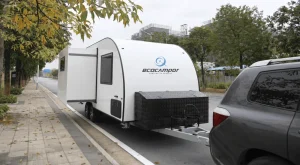
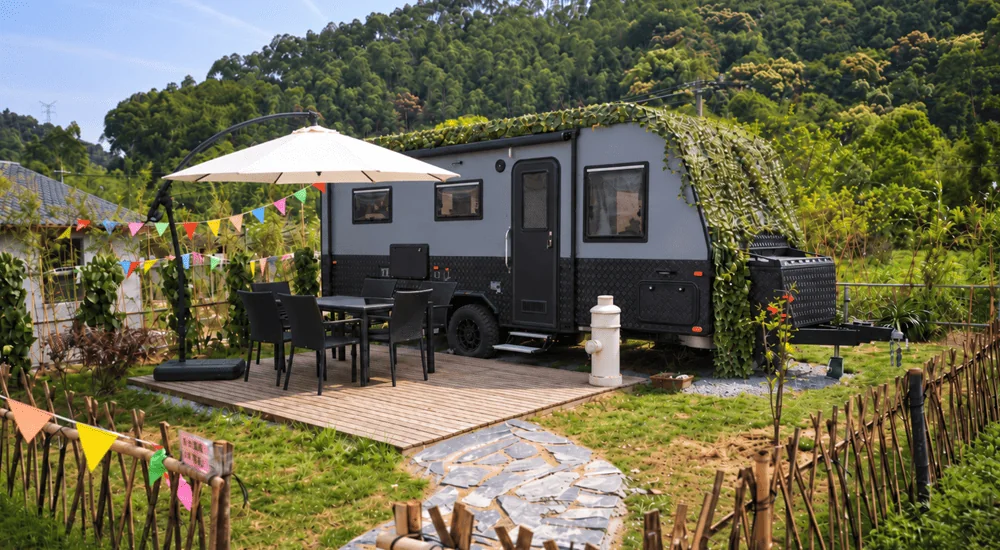
Caravan exterior storage ideas work best when they keep wet, dirty and bulky equipment out of the living space without creating a load, visibility or safety problem. The most useful storage is not always a larger fixed compartment. For many owners, a removable crate, a drainable tub, a boot tray or a properly rated rear carrier can make packing and unpacking far easier.
Key Takeaways
- Wet shoes, recovery gear, fishing equipment and outdoor mats should be separated from the caravan’s main living space.
- For wet gear, drainage and airflow are usually more useful than a fully sealed box.
- Removable crates and tubs are flexible, but they still need to be secured and included in travel-weight calculations.
- Rear-mounted storage can affect ball mass, axle loads and handling; check the complete loaded combination.
- External storage must not dangerously overhang or obscure the number plate, lights, indicators or reflectors.
Why Exterior Storage Matters on a Caravan
A caravan quickly becomes uncomfortable when muddy boots, damp towels, wet fishing gear, hoses, camp mats and recovery equipment are brought through the doorway after every stop. The issue is not only cleanliness. Damp gear can create odour, make floors slippery and keep moisture trapped around furniture, bedding and cupboards.
Good caravan exterior storage creates a simple flow:
- Use the equipment outside.
- Separate it from clean, dry interior items.
- Let wet items drain or air-dry where appropriate.
- Secure the load for travel.
- Unload only what is needed at the next stop.
7 Caravan Exterior Storage Ideas for Wet Gear and Outdoor Equipment
1. Use a front toolbox for dry outdoor essentials
A front toolbox works well for items that need to stay outside the living area but should remain dry: levelling blocks, wheel chocks, gloves, basic tools, hose fittings, tent pegs or compact recovery equipment.
Do not turn a closed toolbox into a permanent wet-gear locker. If soaked clothing, muddy boots or damp mats are placed into a sealed box after every trip, moisture and odour can build up quickly. Treat it as a dry-accessories zone unless the box has a verified drainage and ventilation solution.
2. Carry wet gear in removable crates or tubs
Removable plastic crates or tough tubs are one of the simplest caravan exterior storage ideas. They are useful for camp shoes, fishing gear, outdoor toys, firewood gloves, wet towels or a rolled camp mat. At camp, the crate can be taken out and placed near the awning; before departure, it can be checked, packed and secured.
Choose a tub with a lid only when it is needed for weather protection. For genuinely wet gear, allow the contents to dry before sealing it for a long period. A removable tub also avoids committing every trip to a fixed storage layout.
3. Create a boot-drop zone beside the entry
A small tray, removable mat or shallow boot container near the caravan entry can stop sand, water and mud from travelling through the whole interior. This does not need to be complicated: the goal is to give shoes one clear place to go before anyone steps inside.
For a family caravan, allocate one section for clean sandals and one for muddy boots. Empty and wash the tray regularly rather than allowing water to remain against floor edges or seals.
4. Use a drainable wet-gear locker
If a caravan has an appropriate external locker, it can be useful for hoses, outdoor shower equipment, damp ground sheets or beach gear. The best wet-gear storage does three things: separates moisture from interior furnishings, lets water escape safely and allows airflow after use.
Do not drill drainage holes or add vents to a caravan body, gas compartment, electrical enclosure or sealed storage area without the approval of the manufacturer or a qualified specialist. The solution must suit the construction, waterproofing, wiring and equipment in that exact area.
5. Use a rated rear carrier only for suitable equipment
A rear carrier can be useful for items such as bicycles, a removable cargo box or lightweight outdoor equipment. It is not automatically suitable simply because it fits. Confirm the carrier, mounting points and caravan structure are rated for the intended load.
Weight added behind the caravan axle can materially change handling and tow-ball mass. Include the carrier, box, straps and all contents when checking the caravan’s ATM, GTM and the tow vehicle’s payload and axle limits.
6. Store hoses and outdoor utility gear separately
Water hoses, grey-water equipment, electrical leads, pegs and levelling gear are often used in the same area but should not be thrown into one wet, dirty bundle. A practical approach is to use separate labelled bags or containers:
- Clean-water equipment: drinking-water hose, fittings and filter.
- Utility equipment: levelling blocks, wheel chocks, gloves and basic tools.
- Wet or dirty equipment: ground sheets, outdoor mats, muddy shoes and recovery gear.
This makes setup faster and reduces the risk of mixing clean-water equipment with dirty outdoor items.
7. Keep frequently used camp gear accessible
The most practical exterior storage is often the gear used at every stop: chairs, an outdoor mat, a small table, shoe tray or cooking accessories. Store these items where they can be removed without emptying the whole caravan.
A good test is simple: if an item is used every afternoon, it should not be buried behind clothing, food or bedding. If it is only needed for emergencies, it can sit deeper in a secure toolbox or locker.
Choose Storage by Gear Condition, Not Only by Size
| Type of gear | Better storage approach | Main consideration |
|---|---|---|
| Muddy boots and camp shoes | Boot tray, removable tub or designated entry zone | Keep mud and water away from floors and bedding. |
| Wet towels, swimmers and outdoor clothing | Dry outside first where practical; use a removable ventilated tub for transport | Do not leave damp fabric sealed for long periods. |
| Hoses and fittings | Separate bags or lockers for clean-water and utility equipment | Keep drinking-water equipment clean. |
| Recovery gear and tools | Dry toolbox or rated external compartment | Secure heavy items and include them in load calculations. |
| Bicycles or bulky outdoor equipment | Approved, correctly rated carrier | Check mounting rating, visibility, rear load and caravan handling. |
| Camp mats and ground sheets | Removable crate or drainable external storage | Remove dirt and water before storing for an extended period. |
Before Adding a Rear Box, Rack or Carrier
Rear storage is convenient because it keeps bulky gear outside the caravan. It can also create problems if it is overloaded, poorly mounted or positioned without considering the entire towing combination.
Before fitting or loading a rear carrier, check:
- the carrier’s maximum load rating
- the rating and condition of the mounting points
- the mass of the empty carrier, box, straps and contents
- the caravan’s ATM, GTM, axle and tyre limits
- the effect on tow-ball mass and tow vehicle payload
- the effect on rearward visibility, lights, indicators, reflectors and number plate
- that the carrier, cover, doors and contents remain secure during the trip
The National Transport Commission states that a light-vehicle load must be properly restrained, must not exceed mass limits and must not dangerously overhang or cover lights, indicators, reflectors or the number plate. Read the current Load Restraint Guide for Light Vehicles before relying on a rack, box or other external load solution.
Keep Exterior Storage Secure on the Road
A storage idea is only useful if it remains secure when the caravan is braking, turning, travelling over uneven surfaces or being passed by heavy vehicles. The Queensland Government notes that drivers are responsible for ensuring the towing vehicle, trailer and couplings meet required standards and loaded mass limits.
Before every trip:
- close and latch every toolbox, hatch, crate lid and cargo cover
- check straps, locks, fasteners and tie-down points
- confirm no load can shift into the drawbar, tyres, doors or lights
- check that the number plate, brake lights, indicators and reflectors remain visible
- include water, food, batteries, carrier weight and outdoor equipment in weight calculations
- recheck the load after the first stop and at regular intervals on longer trips
NSW guidance also advises drivers to check during a trip that couplings, doors, hatches, covers and any load or equipment remain properly secured. See the current NSW caravan towing guidance for state-specific rules and safety advice.
A Simple Packing System for Every Trip
Use four categories before packing:
- Clean and dry: bedding, food, clothing and drinking-water equipment.
- Outdoor but dry: tools, levelling blocks, chairs and pegs.
- Wet or dirty: shoes, ground sheets, recovery gear and used outdoor mats.
- Heavy or safety-critical: batteries, gas-related equipment, heavy tools and anything that affects loading.
This system makes it easier to decide what belongs in the cabin, a dry toolbox, a drainable external zone or a rated carrier. It also makes unloading at home less overwhelming: the wet-gear tub can be cleaned first, rather than being forgotten inside the caravan.
Frequently Asked Questions
Can I store wet gear in my caravan front toolbox?
You can temporarily carry wet gear in a suitable external box, but avoid leaving damp clothes, mats or shoes sealed for long periods. Wet gear needs a practical drying routine, and the storage solution must not affect equipment or construction in that compartment.
Can I put a storage box on the rear of my caravan?
Only if the carrier, mounting points and caravan are rated for the load and the full combination remains within all applicable mass limits. The box must be properly secured and must not obscure lights, indicators, reflectors or the number plate.
Does exterior storage affect caravan towing stability?
It can. Storage added behind the axle may change the caravan’s weight distribution and tow-ball mass. Include the empty carrier and all cargo in your loading calculations, then weigh the configured caravan and tow vehicle when necessary.
What is the best way to store muddy boots in a caravan?
Use a removable boot tray, washable mat or external tub near the entrance. Keep the area easy to clean and avoid leaving wet footwear against interior furniture or flooring.
Should clean-water hoses be stored with other outdoor equipment?
It is better to keep drinking-water hoses and fittings separate from muddy, oily or general outdoor equipment. A dedicated clean bag or container makes that easier.
Build a Storage System That Supports the Trip
The best caravan exterior storage ideas make the campsite easier to use without turning every trip into a loading compromise. Start with the gear that creates the most mess, choose removable solutions where flexibility matters and treat every external box, rack and carrier as part of the caravan’s real travel load.
When comparing layouts, think about where wet gear, boots, hoses and outdoor equipment will actually go after a long day outside—not only how the caravan looks in a showroom. Explore Ecocampor travel trailer options to compare layouts and exterior storage possibilities for your intended use.