For Australian dealers importing caravans directly from a Chinese manufacturer, the logistics process between factory gate and Australian delivery involves a sequence of steps that each carry cost, time and risk implications. Understanding how these steps work — and where the key decisions sit — reduces surprises and helps dealers plan accurately from order placement to stock arrival.
This shipping caravans China Australia guide covers the Incoterms that define cost and risk responsibility, marine cargo insurance, production and transit lead times, port clearance, road vehicle approval requirements, and how to build a realistic import timeline from order to delivery.
Key Takeaways
- FOB (Free On Board) is widely used in China–Australia caravan trade. The dealer bears transit risk from the point the cargo is loaded onto the vessel at the Chinese port.
- Under FOB, the Incoterm itself does not require the buyer to purchase marine cargo insurance — but for high-value caravan shipments it is strongly recommended, and may be required by your finance provider, bank or sales contract.
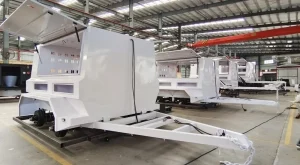
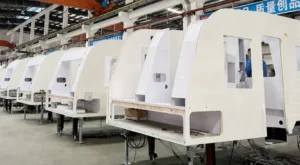
- As a practical planning guide, Ecocampor production is typically around 60 days, with shipping and delivery to Australia approximately another 30–45 days. In many standard cases, total order-to-delivery time is therefore around 90–105 days. Actual timing depends on specification, production scheduling, vessel availability and Australian clearance.
- Port clearance in Australia involves import duty, GST and biosecurity inspection. Using a licensed customs broker is strongly recommended for first-time importers.
- Customs and biosecurity clearance are separate from road vehicle approval. Importers should confirm the applicable RAV pathway under the Road Vehicle Standards Act before the order is placed.
Incoterms for Caravan Imports: What FOB, CIF and EXW Mean
Incoterms (International Commercial Terms) define who pays for freight, insurance and other logistics costs, and at what point risk transfers from seller to buyer. For caravan imports from China, three terms come up most frequently.
FOB — Free On Board
Under FOB, the seller (manufacturer) is responsible for delivering the cargo to the named port of shipment and loading it onto the vessel. Once the cargo is on board, risk transfers to the buyer.
For the buying dealer, FOB means:
- You arrange and pay for ocean freight from the Chinese port to the Australian port
- You bear transit risk from the point of loading — marine cargo insurance is strongly recommended
- You manage Australian port clearance, import duty and GST
- You have more control over freight provider and transit timing
FOB is widely used in China–Australia caravan trade. It gives the dealer visibility and control over the freight cost, rather than accepting the manufacturer’s freight margin built into a CIF price.
A note on FCA for containerised shipments: FOB is commonly quoted by Chinese caravan manufacturers for Australia-bound shipments and is commercially standard for this trade route. However, for containerised cargo, FCA (Free Carrier) may technically be more appropriate — under FCA, risk transfers when the goods are handed to the carrier or container terminal, which better reflects the reality of container logistics where goods leave the seller’s control at the terminal rather than at the ship’s rail. If your finance provider, bank or cargo insurer raises this distinction, discuss with your freight forwarder which term is documented in your contract of sale.
CIF — Cost, Insurance and Freight
Under CIF, the seller arranges and pays for ocean freight and insurance to the named destination port. Risk transfers to the buyer once the cargo is on board the vessel at the origin port — the same point as FOB — but the seller handles the logistics arrangements.
CIF is simpler for first-time importers but removes visibility into the actual freight cost. The freight and insurance charges are included in the unit price, making cost comparison between suppliers less transparent.
EXW — Ex Works
Under EXW, the buyer takes responsibility at the factory gate. The seller has no obligation for loading, export clearance or any subsequent logistics. EXW places the maximum logistics burden on the buyer and is rarely used for first-time importers sourcing from China.
Practical guidance: FOB is the most widely quoted term for this trade route. It is worth confirming with the manufacturer which port the FOB price applies to — typically Ningbo, Shanghai, Tianjin or Guangzhou depending on the manufacturer’s location — as inland haulage from factory to port may or may not be included in the quoted price.
Marine Cargo Insurance
Under FOB terms, the Incoterm itself does not require the buyer to purchase marine cargo insurance — but transit risk passes to the buyer at the point of loading, and for high-value caravan shipments, arranging cargo insurance is strongly recommended. A single container of caravans represents a significant cargo value, and ocean freight carries real risks: container damage, water ingress, vessel incident and port handling damage. Some finance providers, banks or sales contracts may also require insurance as a condition of the arrangement.
What to confirm:
- The appropriate insured value, coverage scope and policy type should be confirmed with a freight forwarder, marine insurance broker or insurer based on the shipment and contract
- Coverage should typically extend from loading at the Chinese port through to delivery at the Australian destination — confirm the coverage period with your insurer
- “All risks” cover is commonly used for cargo of this nature, but policy type and exclusions should be reviewed with your insurer before the vessel departs
When to arrange it: Before the vessel departs the Chinese port. Insurance arranged after a loss event is not valid.
How to arrange it: Through a freight forwarder (many offer cargo insurance as part of their service), a marine insurance broker, or directly through an insurer. Confirm the policy covers the specific cargo type (caravans/trailers) and the named vessel and voyage.
Production Lead Times
Before cargo can be shipped, it has to be built. Production lead time is the most variable component of the total import timeline and depends on the order type and the manufacturer’s current production schedule. The guidance below reflects Ecocampor’s typical production position — confirm current lead times at order placement, as capacity changes.
| Order type | Indicative production lead time |
|---|---|
| Standard / common configuration | Around 60 days |
| Customised / complex specification | May require additional time depending on specification, engineering confirmation and production requirements |
All production is made to order — there are no stock units available for immediate shipment. Lead times apply from the point of confirmed order placement. For custom specifications, production does not typically begin until the specification is confirmed in a signed technical drawing. The drawing confirmation stage adds time and should be factored into the schedule, not treated as a parallel process.
Ocean Freight: China to Australia
Once production is complete and the cargo is ready for export, indicative port-to-port ocean transit times from Chinese ports to Australian ports are:
| Route | Indicative ocean transit |
|---|---|
| Ningbo / Shanghai → Sydney / Melbourne / Brisbane | 18–25 days |
| Ningbo / Shanghai → Fremantle (Perth) | 20–28 days |
| Tianjin (northern China) → Australian east coast | 22–30 days |
These are indicative port-to-port ocean transit estimates and vary by carrier, routing and seasonal schedule changes. Confirm current schedules and transit times with your freight forwarder at the time of booking.
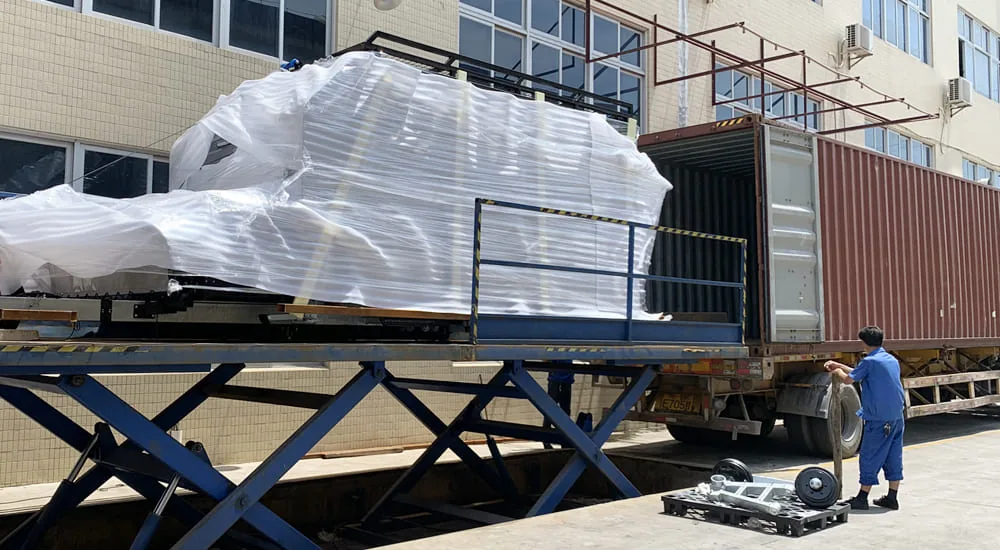
For practical import planning, allow approximately 30–45 days for shipping and delivery in total — this broader figure includes export preparation, vessel booking, ocean transit, Australian port clearance and inland delivery to the destination. Actual timing depends on port, sailing schedule, transshipment if applicable, customs, biosecurity inspection and final delivery location.
Vessel booking: The freight forwarder books space on the vessel. Vessel departure schedules from major Chinese ports are generally weekly or bi-weekly for Australian routes. If the cargo misses a departure window, the next available vessel may be one to two weeks later — factor this into the timeline.
Australian Port Clearance
Once the vessel arrives at the Australian port, the clearance process involves several steps before the cargo can be released for delivery.
Customs clearance: A customs broker lodges an import declaration with the Australian Border Force. The declaration triggers assessment of import duty and GST. The applicable import duty rate depends on the HS (Harmonised System) tariff code for the cargo — caravans and trailers fall under Chapter 87 of the HS schedule. Confirm the applicable rate and any trade agreement concessions with your customs broker before the shipment arrives, not after.
GST at 10% applies to the taxable value of the importation — broadly, the customs value plus freight, insurance and duty.
Biosecurity inspection: The Department of Agriculture, Fisheries and Forestry assesses imported goods for biosecurity risks. For trailers and caravans, this includes contamination from soil, seeds, plant material, insects, organic matter and contaminated underbody, tyres, chassis or associated equipment — not only wooden packaging or crating materials. Biosecurity preparation should begin before shipment: pre-shipment cleaning and inspection of the trailer, undercarriage and packaging reduces the risk of biosecurity-related delays, treatment requirements or re-inspection after arrival in Australia. Delays at the biosecurity stage are unpredictable — allow buffer time rather than planning for a minimum clearance period.
Typical clearance time: 5–10 business days under normal conditions, longer if biosecurity inspection, additional treatment or documentation follow-up is required.
Using a customs broker: For first-time importers, a licensed customs broker manages the import declaration, duty payment, and communication with border agencies. The broker’s fee is a small cost relative to the risk of errors in the declaration process.
Australian Vehicle Approval and RAV Requirements
Customs clearance and biosecurity inspection relate to the import of the cargo — they are separate from the requirements that apply to registering and using a caravan on Australian public roads.
Caravans imported into Australia for road use may be subject to the Road Vehicle Standards Act 2018 (RVSA). Under this framework, vehicles may need to be included on the Register of Approved Vehicles (RAV) — administered through the ROVER system — before they can be registered for road use in a state or territory. The applicable approval pathway depends on factors including the vehicle type, the number of units being imported, the manufacturer’s approval status and whether the import qualifies under a relevant concessional programme.
Importers should confirm the applicable pathway with a compliance engineer or registered vehicle assessor before the order is placed — not after the shipment arrives. This step should be planned in parallel with the import logistics timeline. Failure to confirm the approval pathway before ordering can result in vehicles that cannot be registered for road use without significant additional cost or delay.
For an overview of compliance requirements for imported caravans, see ADR Compliance for Imported Caravans: What Every Australian Dealer Needs to Know.
Building a Realistic Import Timeline
Working backwards from a required delivery date is more reliable than forward-planning from order placement. The stages and durations below reflect Ecocampor’s practical guidance — confirm each stage with your manufacturer, freight forwarder and customs broker for your specific shipment.
| Stage | Indicative duration | Planning notes |
|---|---|---|
| Specification confirmation and order placement | 1–2 weeks | Allow longer for custom specifications requiring drawing confirmation |
| Production | Approximately 60 days | Allow additional time for complex specifications or customisation |
| Shipping and delivery (export, transit, clearance, inland delivery) | Approximately 30–45 days | Allow additional buffer for peak periods, vessel schedule changes or extended biosecurity inspection |
| Total from order to delivery (indicative) | ~90–105 days in many standard cases | Allow additional buffer depending on specification, vessel schedule and clearance |
For seasonal stock requirements — for example, a summer peak in caravan hire — allow additional buffer time beyond the standard 90–105 days and work backwards from the required delivery date to set a realistic order placement deadline.
For a full breakdown of landed cost components — FOB price, freight, insurance, duty and GST — see China vs Australia Caravan Manufacturing: Total Landed Cost Comparison 2026.
For a complete guide to sourcing caravans directly from a Chinese manufacturer, including factory due diligence and supplier evaluation, see The Complete Guide to Sourcing Caravans from China for Australian Dealers.
Frequently Asked Questions
What does FOB mean when importing caravans from China?
FOB (Free On Board) means the manufacturer’s price and responsibility covers the cargo up to and including loading onto the vessel at the named Chinese port. From that point, the Australian dealer bears transit risk and is responsible for ocean freight costs, Australian port clearance, import duty and GST. FOB is widely used in China–Australia caravan trade. The Incoterm itself does not require the buyer to purchase marine cargo insurance, though it is strongly recommended for high-value shipments.
How long does it take to ship a caravan from China to Australia?
As a practical planning guide, Ecocampor caravan production is typically around 60 days, and shipping plus delivery to Australia generally requires approximately 30–45 days. In many standard cases, total order-to-delivery time is therefore around 90–105 days. Actual timing varies with model, customisation, vessel schedules, customs and biosecurity clearance, and final delivery location. These are practical planning figures — confirm current lead times with Ecocampor and your freight forwarder at the time of ordering.
Do I need marine cargo insurance when importing caravans from China?
Under FOB terms, the Incoterm itself does not require the buyer to purchase marine cargo insurance — but transit risk passes to the buyer at the point of loading, and for high-value caravan shipments, arranging cargo insurance is strongly recommended. Some finance providers, banks or sales contracts may also require it as a condition. If you proceed under FOB without insurance and a loss occurs during transit, the buyer bears that loss. Discuss appropriate cover with your freight forwarder or a marine insurance broker before the vessel departs.
What import duty applies to caravans imported from China to Australia?
Import duty is assessed based on the HS tariff code applicable to the cargo. Caravans and trailers fall under Chapter 87 of the Harmonised System. The applicable rate — and any concessions available under relevant trade agreements — should be confirmed with a licensed customs broker before the shipment, as rates and agreement conditions can change. GST at 10% applies separately on the taxable value of the importation.
Should I use a freight forwarder or customs broker?
For most dealers importing caravans from China, using both is practical. A freight forwarder manages the logistics chain — booking vessel space, arranging inland haulage, coordinating documentation. A licensed customs broker manages the Australian import declaration, duty and GST payment, and border agency communication. Many freight forwarders offer customs brokerage as part of their service. For first-time importers, using a forwarder with Australia–China experience reduces the risk of documentation errors and clearance delays.
Ecocampor manufactures caravans and trailers for Australian dealers and can provide relevant export and technical documentation for Australian orders, subject to the model, specification and applicable approval pathway. Contact the team to discuss FOB pricing, production schedule, shipping planning, technical documentation, compliance requirements or model and customisation options for your import programme.