A remote mining camp pre-deployment checklist helps Australian project teams verify the site, accommodation units, utilities, transport plan, approvals, emergency arrangements and handover documents before mobilisation. A finished trailer is not the same thing as a deployment-ready camp. The safest procurement decision is to assign an owner, evidence requirement and due date to every item before the first load leaves the factory or staging yard.
This checklist gives Australian project teams 20 practical checks to complete before mobilising trailerised or transportable accommodation to a mine, exploration camp or construction village. It is written for project delivery teams, not for workers packing for their first FIFO swing.
Key Takeaways
- Freeze the design basis before ordering: headcount, roster, deployment duration, climate, access route and expansion stages drive nearly every later decision.
- Treat accommodation, transport, utilities and approvals as connected workstreams. A unit can be complete at the factory and still be unusable on arrival.
- Obtain written acceptance criteria from the site operator, principal contractor and relevant authorities rather than relying on a generic claim of compliance.
- Test critical interfaces before dispatch, including power, water, wastewater, communications, lifting points and anchoring arrangements.
- Keep one controlled mobilisation register showing the owner, evidence, status and close-out date for all 20 checks.
Why Remote Camp Mobilisation Fails at the Interfaces
Most late-stage problems are not caused by a missing bed or cabinet. They occur where one contractor’s scope meets another: the plug on the accommodation unit does not match the site distribution board; the wastewater connection is on the wrong side; the crane cannot reach the set-down area; the transport route has a tighter envelope than the drawing assumed; or commissioning starts before potable-water results are available.
Western Australia’s Department of Health advises proponents to consider air quality, drinking water, wastewater, food safety, emergency management and workforce health during the early planning of mine sites and accommodation villages. It also treats accommodation villages as sensitive receptors when dust and other emissions are assessed. That makes camp location and utility planning health decisions, not merely layout decisions. See the Department’s guidance on mine sites, exploration camps and construction villages.
The practical response is a stage-gated process:
- Design basis approved before the purchase order is released.
- Factory and documentation readiness confirmed before dispatch.
- Site and logistics readiness confirmed before transport is booked.
- Commissioning evidence accepted before occupation.
The 20-Point Pre-Deployment Checklist
1. Confirm the Project Design Basis
Record the maximum resident headcount, day visitors, roster pattern, intended service life, mobilisation date, demobilisation plan and any staged expansion. Distinguish the initial operating population from the ultimate population. Kitchens, laundries, wastewater systems and emergency arrangements are frequently undersized when teams design only for the first stage.
Evidence to close: approved design-basis document signed by the project manager, operations representative and camp operator.
2. Verify the Site Location and Camp Layout
Confirm coordinates, surveyed levels, drainage paths, prevailing winds, separation from dust and noise sources, vehicle circulation, pedestrian routes and room for future expansion. The WA Department of Health recommends considering dominant wind direction and distance from mining activities when locating accommodation because camps may be exposed to dust and other emissions.
Evidence to close: current site layout with revision number, survey reference and marked exclusion zones.
3. Create an Approvals and Responsibility Matrix
List every approval, inspection and acceptance required by the site operator, principal contractor, local government and relevant state bodies. Name the person responsible for obtaining each item. Do not accept “supplier compliant” as a substitute for model-specific evidence and project-specific approval.
Evidence to close: approvals register showing authority, submission, owner, required date and status.
4. Confirm the Transport Envelope
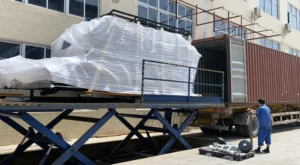
Check the loaded length, width, height, axle loads, total mass, tie-down arrangement and transport classification for every unit. Compare those figures with port handling, road access, bridge limits, overhead services, mine gate restrictions and the final internal haul road. If a permit, escort or route survey may be required, resolve it before dispatch.
For road-towable units, confirm the applicable approval pathway and documentation before they are moved on public roads. Ecocampor’s guide to ADR compliance for imported caravans explains why road approval must be treated separately from site occupation requirements.
Evidence to close: signed transport plan using as-built dimensions and verified loaded masses.
5. Verify Lifting, Set-Down and Recovery Methods
Identify certified lifting points, sling angles, centre of gravity, spreader-beam requirements, crane capacity, outrigger zones and exclusion areas. Confirm how the unit will be recovered at demobilisation; a camp should not depend on lifting assumptions that cannot be repeated after several years in service.
Evidence to close: approved lift plan, lifting-point certification and crane study.
6. Complete Earthworks, Foundations and Anchoring Design
Confirm pad bearing capacity, levels, drainage, footing or pier details, levelling method, tie-downs and cyclone anchoring where applicable. WorkSafe WA states that accommodation units, dongas and other transportable buildings in cyclone-sensitive regions should be adequately secured. Its cyclone emergency preparation guidance should be considered alongside project engineering requirements.
Evidence to close: civil completion certificate plus approved foundation and anchoring drawings.
7. Check Road and Site Access Readiness
Inspect the route close to mobilisation, not only during tendering. Confirm road condition, turning radii, gradients, soft shoulders, floodways, gate dimensions, wash-down requirements, delivery windows and communications coverage. Nominate a hold point if heavy rain, flooding, bushfire or road damage makes the route unsuitable.
Evidence to close: dated route inspection, access photographs and site acceptance of the delivery plan.
8. Approve the Electrical Load and Distribution Plan
Prepare a load schedule covering accommodation, HVAC, hot water, kitchen, laundry, pumps, lighting, communications and start-up currents. Confirm generator or grid capacity, distribution-board arrangement, earthing, protection, cable routes, connectors and spare capacity. Electrical work must be designed, installed and verified for the specific Australian jurisdiction and site.
Evidence to close: approved single-line diagram, load schedule, test certificates and connector schedule.
9. Confirm HVAC Performance for the Real Climate
Specify the outdoor design conditions, internal set point, occupancy, solar load, insulation assumptions, fresh-air requirement, redundancy and filter-maintenance interval. A unit selected from nominal air-conditioner capacity alone may underperform in high ambient temperatures or heavy dust.
For Pilbara projects, compare the equipment brief with the environmental considerations in Pilbara Mining Trailer Specifications.
Evidence to close: HVAC selection calculation, equipment data and commissioning test plan.
10. Validate Drinking-Water Capacity and Quality Controls
Document the water source, treatment process, storage, turnover, sampling points, testing responsibility and incident response. WA mine sites and exploration camps that supply drinking water to employees or contractors must follow the state’s drinking-water quality requirements, which are based on the Australian Drinking Water Guidelines. Review the WA Department of Health’s mine-site drinking-water requirements.
Evidence to close: water balance, treatment and sampling plan, tank-cleaning records and acceptable commissioning results.
11. Confirm Wastewater and Drainage Capacity
Calculate peak flows for the ultimate headcount and operating pattern. Confirm treatment or disposal method, connection levels, pump duty, alarms, overflow response, grease management where food service is included, and capacity during maintenance. The WA Department of Health notes that existing regional sewerage systems may not have capacity for increased connections, so external infrastructure cannot be assumed.
Evidence to close: approved wastewater design, capacity calculation and commissioning procedure.
12. Freeze All Service Interfaces
Create an interface schedule showing the location, size, rating and responsibility for every power, water, wastewater, gas, data and fire-system connection. Use coordinated drawings rather than separate supplier sketches. Photograph and label both sides of each interface before shipping.
Evidence to close: signed interface-control document and as-built connection drawings.
13. Test Communications and Emergency Backup
Confirm radio, mobile, satellite, internet, public-address and emergency contact arrangements. WorkSafe WA recommends reliable backup communication where cyclone conditions may interrupt power or telephone systems. Test the backup method under loss-of-power conditions rather than assuming it will work.
Evidence to close: communications test record, coverage map and emergency contact list.
14. Approve Fire and Emergency Arrangements
Align detection, alarms, extinguishers, egress, muster points, emergency lighting, vehicle access and evacuation procedures with the site’s risk assessment and emergency plan. The WA Department of Health advises remote mine sites and accommodation villages to develop an Emergency Medical Response Plan because isolation and natural hazards can delay external assistance.
Evidence to close: approved emergency plan, equipment inspection records and drill schedule.
15. Verify Cyclone, Flood, Heat and Bushfire Readiness
Identify the hazards relevant to the exact location. For cyclone-sensitive regions, confirm anchoring, loose-object control, shutdown steps, shelter strategy, evacuation triggers, backup supplies and warning-monitoring responsibility. Do not describe a transportable bedroom as a cyclone shelter unless the project has specifically assessed and approved it for that purpose.
Evidence to close: site-specific severe-weather plan linked to engineering and evacuation decisions.
16. Check Dust, Noise, Lighting and Worker Amenity
Review air-intake positions, filtration, door and service penetrations, pressure strategy, room acoustics, external lighting and blackout provisions for day sleepers. Camp placement should reduce exposure to dust, noise and light generated by mine traffic and operations. The goal is not just a clean handover; it is a room that remains usable through the roster cycle.
Evidence to close: amenity review, room inspection criteria and planned maintenance intervals.
17. Match Room Mix and Welfare Facilities to the Workforce
Confirm accessible rooms, bathrooms, laundries, dining capacity, refrigeration, recreation, storage, cleaning facilities and any gender or privacy requirements. Validate walking distances and peak-time capacity. Ask the camp operator to review layouts before manufacturing is frozen because operating details often expose problems that drawings do not.
Evidence to close: operator-approved room and facility schedule tied to headcount and roster assumptions.
18. Complete Factory Acceptance and Pre-Dispatch Inspection
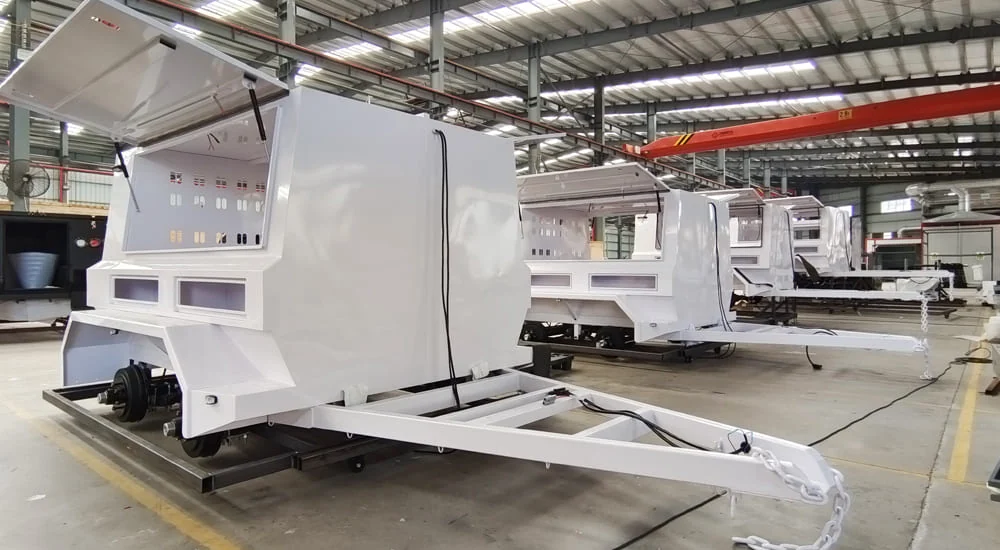
Inspect the actual units against approved drawings and the purchase specification. Test electrical functions, plumbing pressure, drainage, HVAC operation, doors, windows, seals, appliances, alarms and installed loose equipment. Record serial numbers and close every defect before loading. A representative sample may be insufficient where interfaces or configurations vary between units.
Evidence to close: signed factory acceptance test, defect register, photographs and packing list for each configuration.
19. Prepare Spares, Maintenance and Warranty Workflows
Set the initial spares list from expected duty cycle, location and replenishment lead time. Include consumables, filters, pumps, seals, electrical components and model-specific items that could stop a room or utility system from operating. Agree how faults will be reported, triaged and authorised across the manufacturer, importer, site team and local service provider.
Evidence to close: recommended-spares list, maintenance plan, warranty matrix and escalation contacts.
20. Control Commissioning, Handover and Occupation
Define who can accept the camp and what evidence is required before occupation. Commission utilities under realistic loads; verify alarms, protective devices, hot water, drainage, HVAC, lighting, communications and emergency systems; train operators; and issue as-built documents. Open defects should be risk-assessed, assigned and dated rather than disappearing into email.
Evidence to close: signed commissioning pack, training records, as-built manual and occupation approval.
Mobilisation Register Template
Use one live register rather than separate email chains. The minimum fields are below.
| Field | What to record |
|---|---|
| Item | One of the 20 checks or a project-specific sub-item |
| Acceptance criterion | The measurable condition required for close-out |
| Evidence | Drawing, certificate, test result, photograph or approval |
| Owner | One named person, not only a company or department |
| Required date | Date needed to protect manufacturing or mobilisation |
| Status | Not started, in progress, blocked or closed |
| Residual issue | Accepted exception, temporary control or follow-up action |
| Approver | Person authorised to accept the evidence |
Five Go or No-Go Gates
| Gate | Minimum decision before proceeding |
|---|---|
| Purchase order release | Design basis, scope, interfaces and approval pathway accepted |
| Manufacturing release | Coordinated drawings, loads, room mix and equipment schedules frozen |
| Dispatch release | Factory tests passed, defects closed, documents and transport plan accepted |
| Site delivery | Access, crane, pads, anchoring and utilities ready for the arriving units |
| Occupation | Commissioning, water results, emergency arrangements, training and handover accepted |
No single gate removes the need for professional engineering, regulatory approval or site-operator acceptance. The table is a control sequence that makes missing evidence visible before it becomes a site delay.
Common Mobilisation Mistakes
Treating the Trailer Specification as the Whole Camp Design
The accommodation unit is only one subsystem. Power generation, water treatment, wastewater, communications, roads, lifting and emergency management determine whether the camp can operate.
Ordering Against Tender Drawings That Were Never Frozen
Tender drawings are often adequate for pricing but incomplete for manufacture. Release production only after interfaces, options and revision status are controlled.
Leaving the Site Team Out Until Delivery
Camp operators and maintenance personnel see practical issues early: inaccessible filters, wrong hose connections, no room for service vehicles or spares that cannot be sourced locally.
Using Generic Compliance Statements
Ask for the specific drawing, certificate, test result or approval that applies to the model and project. Compliance depends on configuration, jurisdiction, installation and intended use.
Commissioning Without Realistic Loads
Testing one air conditioner, tap or room at a time does not demonstrate system performance at peak occupancy. Commission the integrated system against an approved test plan.
Choosing a Trailerised or Modular Camp Approach
Mobilisation controls apply to both trailerised and modular accommodation, but the risk profile differs. Trailerised units may simplify relocation and staged deployment, while larger modular buildings may suit longer-duration camps and centralised services. Compare transport frequency, installation effort, utilisation, maintenance and demobilisation rather than only purchase price. Ecocampor’s trailerised versus modular mining camp cost guide provides a useful commercial framework for that decision.
Frequently Asked Questions
What is a remote mining camp pre-deployment checklist?
It is a controlled list of the technical, logistical, regulatory and operational conditions that must be verified before accommodation units move to site. It should cover design basis, approvals, transport, foundations, utilities, worker amenity, emergency readiness, commissioning and handover, with an owner and evidence requirement for every item.
Who should own the mining camp mobilisation checklist?
One project manager or mobilisation lead should control the master register, while individual items are assigned to engineering, procurement, logistics, HSE, camp operations, suppliers and contractors. A checklist shared by everyone but owned by no one usually becomes an incomplete status report.
When should mobilisation planning begin?
It should begin before the purchase order because site constraints affect the unit design, service interfaces, transport method and documentation scope. The register should then be updated through design, manufacturing, dispatch, installation and occupation.
Is a FIFO camp setup checklist the same as a worker packing list?
No. In this context, a FIFO camp setup checklist is a B2B project-control document for deploying accommodation and supporting infrastructure. A worker packing list covers personal items for an individual roster and does not address engineering, approvals, utilities or commissioning.
What should be checked before accommodation trailers leave the factory?
Confirm the approved configuration, as-built dimensions and masses, service-interface locations, functional tests, serial numbers, defect close-out, packing list, transport restraints and the complete documentation package. Dispatch should be a formal hold point, not only a shipping date.
Can one checklist be used for every Australian mining project?
The 20 checks provide a common control framework, but the acceptance criteria must be adapted to the project’s jurisdiction, operator standards, climate, hazards, workforce, intended duration and site services. Obtain project-specific advice from qualified professionals and the relevant authorities.
Turn Mobilisation Requirements into a Manufacturing Brief
Ecocampor recommends converting the mobilisation register into a model-specific manufacturing and documentation brief before drawings are approved. This allows service interfaces, room configurations, climate requirements, transport constraints, inspection points, spares and handover documents to be agreed before production.
Australian dealers, EPC contractors and project procurement teams can contact Ecocampor to request a project specification review, model drawings and a proposed factory-acceptance checklist. Final engineering, compliance and site approval should always be confirmed for the actual configuration and deployment location.
Sources
- WA Department of Health: Mine sites, exploration camps and construction villages
- WA Department of Health: Mine sites and exploration camps drinking water
- WorkSafe WA: Cyclone emergency preparation, planning and preparedness
- WorkSafe WA: Is your site ready for cyclone season?
General information only: This guide does not replace project-specific engineering, legal, health, safety, environmental or regulatory advice.